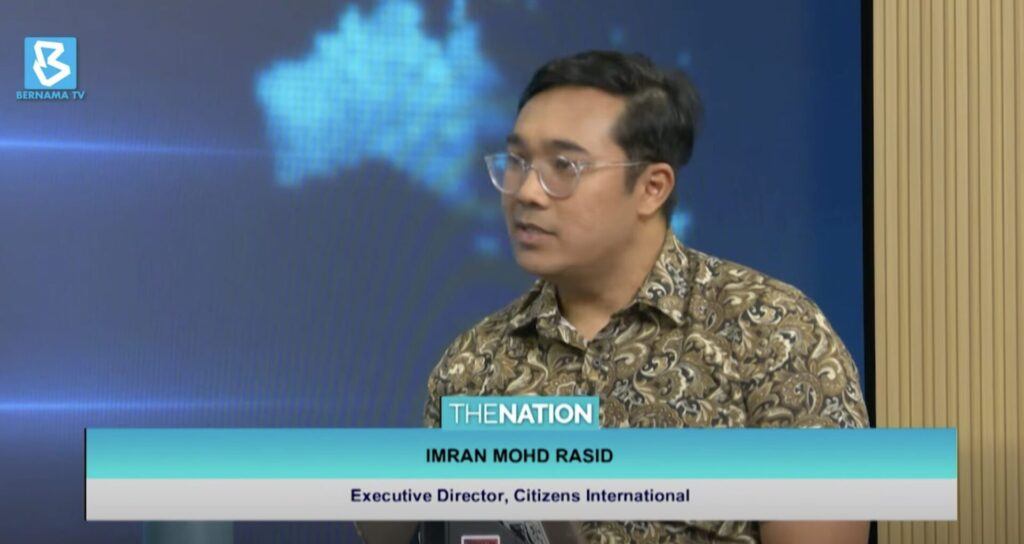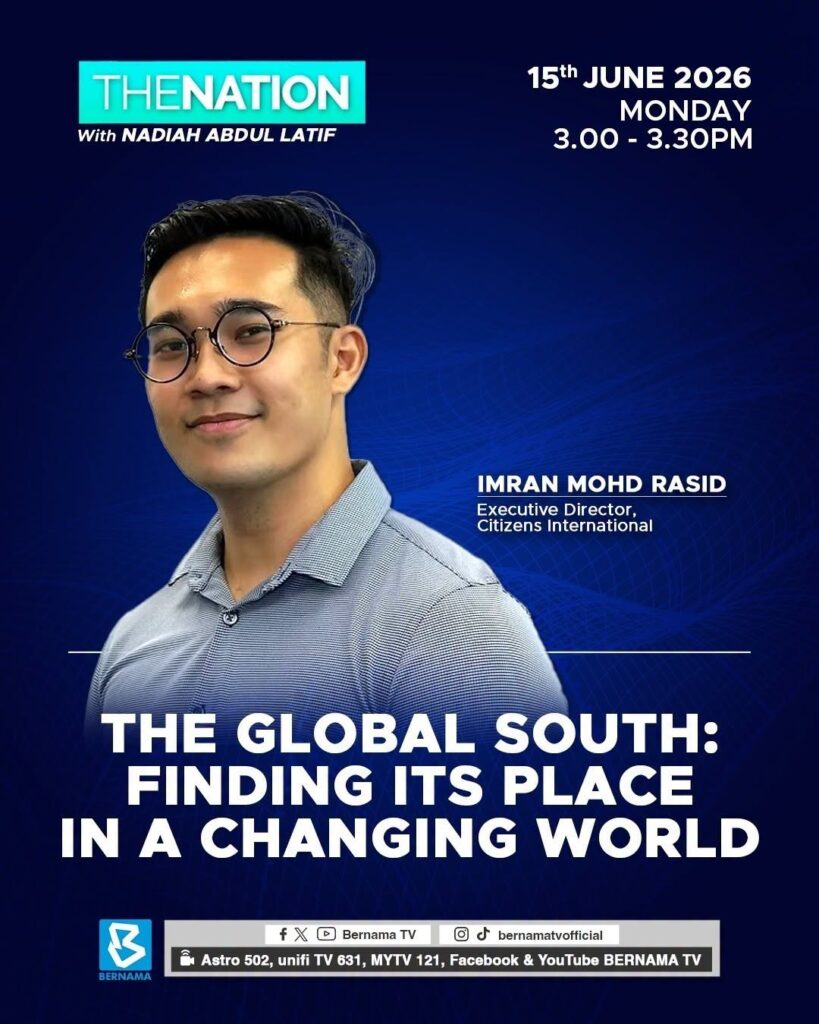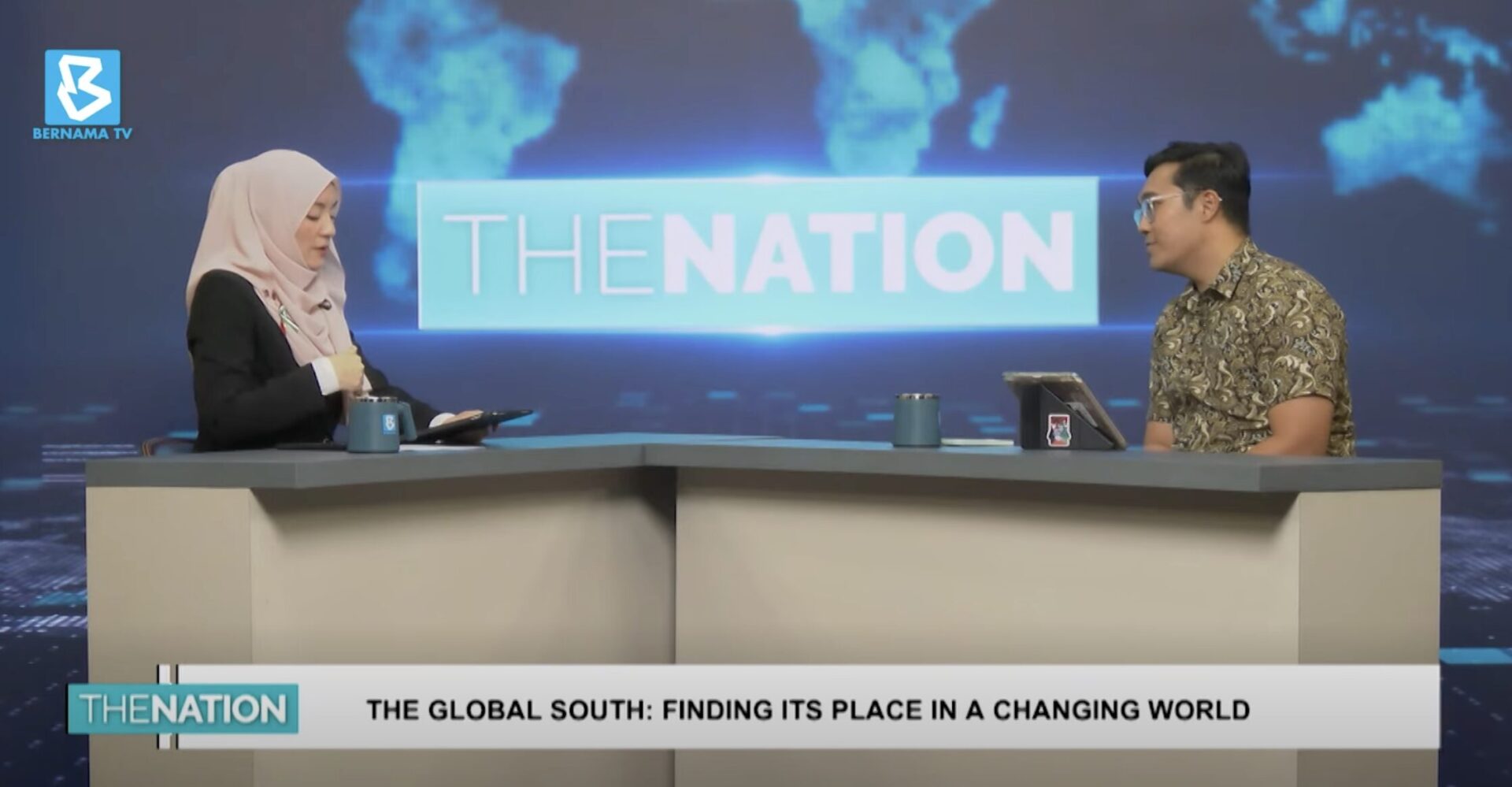
On the 15th June 2026, Imran Rasid, Executive Director of Citizens International joined Bernama TV The Nation together with the host, Nadiah Hanim Abdul Latif, to discuss about how do we even make sense of the “Global South” today?
Imran asserted that 𝑡ℎ𝑒 𝐺𝑙𝑜𝑏𝑎𝑙 𝑆𝑜𝑢𝑡ℎ 𝑖𝑠𝑛’𝑡 𝑟𝑒𝑎𝑙𝑙𝑦 𝑎 𝑔𝑒𝑜𝑔𝑟𝑎𝑝ℎ𝑖𝑐𝑎𝑙 𝑐𝑎𝑡𝑒𝑔𝑜𝑟𝑦. 𝐼𝑡’𝑠 𝑏𝑒𝑡𝑡𝑒𝑟 𝑢𝑛𝑑𝑒𝑟𝑠𝑡𝑜𝑜𝑑 𝑎𝑠 𝑎 𝑚𝑜𝑟𝑎𝑙 𝑔𝑒𝑜𝑔𝑟𝑎𝑝ℎ𝑦 — one defined by economic and political inequality, colonial extraction, and resistance to great power domination.
Within that moral geography sits a particular vision of the world, shaped by two things: (a) a critique of how the international system is currently structured, and (b) a demand for redesigning it to be more just and equitable.
The Global South agenda emerged from the recognition that the world is problematically structured in hierarchical terms, with one dominating the other.
➡️ On one side: the “Global North” — countries whose development was built on centuries of colonial extraction, yet continue to pursue economic growth at others’ expense, all while selectively enforcing a “rules-based order” they themselves bend when convenient.
The same group designs international structures in finance, trade, law that consistently disadvantage developing nations and scrutinise their development pathways more harshly.
➡️ On the other: the rest of the world, navigating development under those very conditions. In response, many countries of the Global South have advanced and fought for a different vision for the world, one that speaks of a fairer world for all and more equitable economic distribution for the many, not the few.
The Ten Principles of Bandung (Dasasila Bandung), adopted at the 1955 Bandung Conference, already captured this vision. This should be a reminder that the Global South agenda is not a recent invention, but has a long-standing history in anti-colonial struggle and the fight against great power domination.
You can find the full recording of the discussion here.